Monday, January 24, 2011

Supreme surprise

“We were the most surprised of all…I have done a lot of research and in 52 years I do not find a single case brought by civil society against a cabinet minister.”

That is the reaction of Wilfredo Vallín, head of the Asociación Jurídica Cubana, an unregistered private association, to the fact that Cuba’s supreme court accepted his case against the Minister of Justice and heard it last Friday. La Jornada’s correspondent interviewed him and explains the case here.

The issue before the court is far from momentous. Vallín wants to obtain legal status for his organization, and the first step in that process is to ask the Justice Ministry whether there exists another organization with his association’s name and purposes. He received no answer, so he filed his lawsuit.

The association seeks to provide information to the Cuban public about legal issues and to provide legal advice (but not representation) to individuals.

Vallín’s blog has several items on the case.

Odds and ends

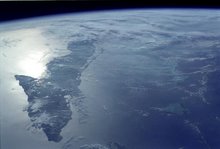
  • Rep. Vern Buchanan of Florida wants to block “Cuba’s plan to drill for oil in its sovereign waters off the Florida Keys,” and he introduced a bill to allow the Secretary of the Interior to deny U.S. oil leases to international companies that do business with Cuba. His press release is here.

  • Freedom House’s Matt Brady has a thesis about the arrest and detention of USAID contractor Alan Gross: It’s a sign that when it comes to U.S.-Cuba relations, Havana prefers to keep things just the way they are.

  • Cuba suspended mail service to the United States, Reuters reports, because tighter U.S. security measures were causing some U.S.-bound mail to be returned. U.S. officials told EFE that no special procedures were applied to Cuba, there was no order to return mail to Cuba, and any return of mail to Cuba may have had to do with a decision by third-country air carriers. Prensa Latina summarizes the Cuban postal service announcement here.

  • Penultimos Dias posts a 30-page paper (pdf) in English by German scholar Bert Hoffman on communications technologies and the development of civil society in Cuba.

  • Herald: President Obama’s decision to allow greater academic travel and programs with Cuba is irrelevant to Florida’s public universities, which remain barred by state law from engaging in those activities.

Gutted

The Hotel Capri, center, gutted and in the process of renovation.

Sunday, January 23, 2011

Yet more from Wikileaks

As Wikileaks has barely passed the one percent mark in its release of its quarter-million U.S. diplomatic cables, it has published a few more on Cuba:

Saturday, January 22, 2011

More from Wikileaks

From a June 17, 2008 cable from the U.S. Interests Section in Havana, recounting a conversation with the Brazilian embassy in Havana about the visit of Foreign Minister Celso Amorim:

“…during Amorim’s conversation with Raul Castro, the Cuban leader stated that he had no intention of lifting the ‘tarjeta blanca’ restriction on foreign travel by Cuban citizens at anytime in the near future. In response to a query from Amorim, Castro stated firmly that lifting this restriction would result in Cubans departing the island en masse, the bulk of them heading for Mexico. Castro believed this exodus would negatively influence the bilateral relationship between Mexico and Cuba. Castro also denied that any significant change to Cuba’s dual-currency system was in the works. While he conceded that the Convertible Peso/Ordinary Peso system created deep divisions in Cuban society, he stated that any change in the exchange rate to favor the ordinary peso would spike inflation in Cuba and lead to devastating food shortages.”

Friday, January 21, 2011

Odds and ends

  • The Wall Street Journal reports on the economics of Cuba’s medical missions and on the Bush Administration’s program that gives Cuban medical personnel who seek asylum in third countries a fast track to come to the United States. Nearly 1,600 have come to the United States under that program, the article says.

  • Via Penultimos Dias, an article (pdf) in Harper’s on a writer’s 30-day experiment living in Cuba on a regular Cuban peso salary.

  • Yoani Sanchez recounts her conversation with visiting American actress Julia Stiles.

  • A trial is under way in the case of 26 deaths of patients at a psychiatric hospital last year. Reuters story here, Granma’s here, and other links are compiled at Penultimos Dias.

  • The Engineer, a British magazine, says a U.K. company is going to work with Cuba’s sugar ministry to build power plants fueled by bagasse, the waste product of sugar milling.

  • Convergence: Granma calls the Posada Carriles trial “the farce in El Paso,” and Babalu calls it a “kangaroo court.”

  • For the record, two articles on a story I didn’t note at the time, the January 6 cabinet changes: from AP and La Jornada. I discussed them on CNN Spanish, here.

  • Off topic, who would have known that the Cosa Nostra is into renewable energy? This is from a Wikileaked cable from the U.S. consulate in Naples, June 2009: “The Sicilian Mafia’s principal activities are drug trafficking, extortion, rigging of public contracts and trafficking in persons, though the mob has also invested heavily in legal enterprises in the construction and food industries, and more recently, wind energy.”

Thursday, January 20, 2011

UM: Cuba's "economic warfare" on the United States

This is really something to behold: an allegation from the University of Miami’s Cuba Transition Project that the Cuban government is to blame for Miami’s status as the Medicare fraud capital of the United States.

“Possibly,” the paper states, this constitutes “economic warfare on the United States.”

Possibly it’s something else too, but why hold back?

What it most definitely is, is vague. What with the paper’s many qualifiers and anonymous sources who don’t make specific charges, we are left wondering just how Cuba has “found ways to capitalize on large-scale Medicare fraud.”

As for the lack of an extradition treaty, that’s technically untrue. We have a century-old treaty that has been in disuse for a half-century, and we have occasional ad hoc arrangements where Cuba renders fugitives to the United States. Given the state of relations and U.S. distrust of the Cuban judicial system, it’s probably out of the question to expect a normal extradition arrangement. Such a pact would involve a presumption that both governments would deliver fugitives to each other, something to which the University of Miami would surely object.