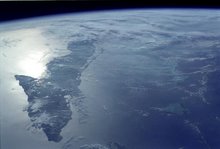
Friday, November 7, 2008

Obama on Cuba

As everyone wonders what an Obama Administration will do in Cuba policy, I thought it would be useful to assemble some statements that he and the Democratic Party made before the election. Full versions of these documents are here.

From the 2008 Democratic Party Platform:

“And we must build ties to the people of Cuba and help advance their liberty by allowing unlimited family visits and remittances to the island, while presenting the Cuban regime with a clear choice: if it takes significant steps toward democracy, beginning with the unconditional release of all political prisoners, we will be prepared to take steps to begin normalizing relations.”

From a May 2008 Obama speech in Miami:

Throughout my entire life, there has been injustice in Cuba. Never, in my lifetime, have the people of Cuba known freedom. Never, in the lives of two generations of Cubans, have the people of Cuba known democracy. […]

My policy toward Cuba will be guided by one word: Libertad. And the road to freedom for all Cubans must begin with justice for Cuba’s political prisoners, the rights of free speech, a free press and freedom of assembly; and it must lead to elections that are free and fair.

Now let me be clear. John McCain’s been going around the country talking about how much I want to meet with Raul Castro, as if I’m looking for a social gathering. That’s never what I’ve said, and John McCain knows it. After eight years of the disastrous policies of George Bush, it is time to pursue direct diplomacy, with friend and foe alike, without preconditions. There will be careful preparation. We will set a clear agenda. And as President, I would be willing to lead that diplomacy at a time and place of my choosing, but only when we have an opportunity to advance the interests of the United States, and to advance the cause of freedom for the Cuban people. […]

It’s time for more than tough talk that never yields results. It’s time for a new strategy. There are no better ambassadors for freedom than Cuban Americans. That’s why I will immediately allow unlimited family travel and remittances to the island. It’s time to let Cuban Americans see their mothers and fathers, their sisters and brothers. It’s time to let Cuban American money make their families less dependent upon the Castro regime.

I will maintain the embargo. It provides us with the leverage to present the regime with a clear choice: if you take significant steps toward democracy, beginning with the freeing of all political prisoners, we will take steps to begin normalizing relations.

From an Obama op-ed, Miami Herald, 8/21/07:

The United States has a critical interest in seeing Cuba join the roster of stable and economically vibrant democracies in the Western Hemisphere. Such a development would bring us important security and economic benefits, and it would allow for new cooperation on migration, counter-narcotics and other issues. […]

Unfortunately, the Bush administration has made grand gestures to that end while strategically blundering when it comes to actually advancing the cause of freedom and democracy in Cuba. This is particularly true of the administration's decision to restrict the ability of Cuban Americans to visit and send money to their relatives in Cuba. This is both a humanitarian and a strategic issue. That decision has not only had a profoundly negative impact on the welfare of the Cuban people. It has also made them more dependent on the Castro regime and isolated them from the transformative message carried there by Cuban Americans.

In the ''Cuban spring'' of the late 1990s and early years of this decade, dissidents and human-rights activists had more political space than at any time since the beginning of Castro's rule, and Cuban society experienced a small opening in advancing the cause of freedom for the Cuban people.

U.S. policies -- especially the fact that Cuban Americans were allowed to maintain and deepen ties with family on the island -- were a key cause of that ''Cuban spring.'' […]

Cuban-American connections to family in Cuba are not only a basic right in humanitarian terms, but also our best tool for helping to foster the beginnings of grass-roots democracy on the island. Accordingly, I will grant Cuban Americans unrestricted rights to visit family and send remittances to the island.

Centro Habana

Odds and ends

  • Brazil’s Petrobras acquired rights to explore for oil in waters off Cuba’s north coast between Havana and Varadero (see bloc N37 in the map here). “I don't understand why it took so long to sign this agreement,” Brazil’s President said in this AP report. Cuba recently announced a doubling of estimated reserves – but whether or not prospective investors find those estimates credible, surely they see that Cuba is behind on payments to two Canadian companies already producing oil. Last summer, Pebercan announced that Cuba was $37 million in arrears, and Sherritt just announced that Cuba is $392 million behind in payments.

  • A Granma article ridicules an election-night event hosted by the U.S. Interests Section in Havana – reportedly, there was balloting, the Cuban guests voted 64% for McCain, and the satellite television cut out after McCain’s concession, and before the Obama speech. Rui Ferreira has a report from the scene (desserts were “frugal,” it says), click here and scroll down to November 5.

  • The Sun-Sentinel on Cuba’s high cell phone rates – including per-minute charges for incoming calls. I understand that a monopoly charges what it pleases, but does the Cuban phone company really believe that they maximize profit at these prices?

Paloma

Another hurricane, Paloma, is headed toward Cuba.

Here’s hoping it never gets there. But if it does, and if it causes damage, here’s what I hope: that the United States renews its offer of aid and picks up where the conversations left off after Ike, where the “assessment team” is no longer on the table; that Cuba plays no political games with any aspect of a U.S. offer; that Secretary Gutierrez says nothing; and that American aid finally gets through. Especially building supplies for housing reconstruction. And that American companies that have sold food to Cuba since 2001, make a donation of free food.

Wednesday, November 5, 2008

A more perfect Union

There’s plenty of time to discuss the election’s impact on the subject of this blog. For now, here’s something off topic.

I had the opportunity to attend Senator Obama’s last campaign rally in Manassas, Virginia. We followed my son’s sense of when to hit the road, an as a result we arrived early and found a spot about 100 yards from the podium.

Manassas is in Prince William County, an area that divides the northern Virginia region from the rest of the state, or what a McCain spokeswoman called “the real Virginia” in one of the campaign’s most unfortunate, and self-damaging turns of phrase.

The event was held at an agricultural fairgrounds, in a field that stretched way up a hillside. The place eventually filled in with about 90,000 nice people, incredibly packing the entire hillside. The crowd was diverse and skewed toward younger Americans, probably because of the challenges of parking, walking to the site, and standing in an open field with no seating late into the night.

Long before the program began, I turned to a black man standing next to me and made an attempt at light humor, telling him that in about three and a half hours, the program would be starting right up.

“I’ve been waiting my whole life,” he responded.

I got the point.

We were in the Old Dominion, a former slave state that housed the seat of the 19th century Confederacy and that met 20th century integration with “massive resistance.” Two fine candidates were ending campaigns that were fundamentally about their own qualities and ideas, and about the country’s challenges. We witnessed the end of one candidacy that was not about race, but that in itself marked a milestone in our nation’s history, and would have done so regardless of which candidate won.

“A more perfect union” were the words that came to mind.

My friend in that field had been waiting his whole life, he said. So too, I suppose, had been Virginia, and the whole country.

[Washington Post photo]

Monday, November 3, 2008

Show-offs

Juventud Rebelde published a long article, first of a series, about “ostentatious” Cubans. It describes people with gold jewelry, fancy clothes and cell phones, loud demands for service in restaurants, and a “this city is ours” attitude.

It’s treated as a sociological problem – the headline is “Those mistaken people” – and includes interviews with a psychologist and other professors who talk about confusing material well-being with accomplishment and self-worth. The “challenges for Cuban socialism in the decades to come will not be simply economic, but also, and above all, political, i.e. cultural,” the article concludes.

[Illustration from Juventud Rebelde.]

Friday, October 31, 2008

CNN on the Miami Congressional race

A look at the Diaz-Balart/Martinez House race:


17-0

True to form, it wasn’t a cliffhanger. For the 17th year in a row, the UN General Assembly approved the resolution urging the United States to end the embargo. The vote this year was 185-3, with two abstentions.

184 voted “yes” last year, and Cuban media report that Albania voted “yes” this year to bring the total to 185. Cuban media are happily comparing this year’s vote to 1992, when there were only 59 affirmative votes.

The Marshall Islands changed its usual “yes” to an abstention this year.

The Los Angeles Times editorialized on the vote and the “blunt instrument” of the embargo. If this vote prompts a new Administration to take a fresh look at U.S. sanctions, so much the better.

Odds and ends

  • The Voice of America: “Democratic Support Growing Among Cuban-American Voters.” The Herald looks at high-dollar contributions to the Miami House races, and reports that the Democratic Congressional Campaign Committee “has spent $1.1 million against the Diaz-Balarts.”

  • A new blog, “In the Americas,” from the commander of the U.S. Southern Command, Admiral James Stavridis.

  • Comcast offers a 79-cent/minute rate for phone calls to Cuba, but apparently only for customers who sign up for a certain combination of services. That’s exorbitant compared to rates to other countries, but from what I know, it’s a bargain compared to other rates to Cuba. AT&T starts at 92 cents per minute, the Herald reports. A more skeptical view is found here.

  • The President of Brazil is in Cuba, reportedly to sign a deal to allow Petrobras to explore for oil in Cuban waters, and to advance cooperation in soy farming.

Wednesday, October 29, 2008

Today's UN vote

Today the UN General Assembly will vote on a resolution (text here, pdf) that urges the United States to end its Cuba embargo.

There are lots of reasons, depending on your point of view, not to pay attention to this event. It’s a top priority of Cuban diplomacy. The debate will feature Cuban assertions about the embargo’s damages to the Cuban economy ($3.77 billion in 2007) that can’t be verified, and that ignore the cost to Cuba’s economy of Cuba’s own economic policies. The resolution has no teeth and the UN has no enforcement power. The resolution asserts that the embargo violates international law, as if the United States lacks the right to refrain from trade with another country. In the debate, Cuba will go one better and call U.S. policy “genocidal” not just rhetorically, but as a matter of international law.

On top of all that, the resolution has been presented, debated, and voted upon 16 times before, every year since 1992. The score so far: Cuba 16, United States 0.

If there has been any drama in this, it has been the slow movement of U.S. allies over the years. They used to abstain, but now vote in favor of the resolution. Last year the vote was 184-4, with Palau, the Marshall Islands, and Israel joining the United States. (Israel trades with and invests in Cuba.)

So if the vote today brings the score to 17-0, it will not exactly break new ground, but it will remind us of a few things.

First, Cuba knows how to do multilateral diplomacy.

Second, while many governments agree with U.S. criticisms of Cuban human rights practices, virtually all agree, as the resolution says, that U.S. sanctions have “adverse effects” on the Cuban people. And virtually all are willing to vote to urge the United States to lift the embargo.

Third, if a new U.S. Administration decides that it wants to work more closely with allies and other countries on the Cuba issue, U.S. sanctions – from the embargo to direct action against third-country banks and companies – are an obstacle.

Tuesday, October 28, 2008

Odds and ends

  • The Sun-Sentinel reports on the post-hurricane crackdown on black market activity involving food. More here from AP, and from Cubanet, from Santa Clara.

  • The UN’s World Food Program announced a $5.7 million program to provide food, storage facilities, and cooking equipment to areas hit by the hurricanes. About one in six Cubans, 1.78 million people, will be served.

  • Cuban Colada notes a Russian newspaper story that gives one Russian analyst’s explanation for Russia’s decision to help Cuba with air defense.

  • Encuentro is asking Cubans to write their advice to the next American president. Three letters have been published so far, from Dagoberto Valdes (editor of Convivencia) and opposition figures Manuel Cuesta Morua and Martha Beatriz Roque. Valdes (indirectly) and Cuesta (very directly) oppose current U.S. sanctions. Roque limits herself to advising a new U.S. president to take Latin America seriously.

Fewer arrivals at the Mexican border

El Nuevo Herald has a report on Cuban migration to the United States in just-concluded fiscal year 2008.

From October 2007 to May 2008, the number of Cubans entering via land borders (last year, 90 percent came from Mexico) was unchanged from the previous year’s levels. From June through September 2008, the numbers fell 40 percent, which supports the theory, discussed here, that the new Cuban Family Reunification Parole Program is causing a reduction in alien smuggling.

El Nuevo links to statistics from the Department of Homeland Security here.

On the balcony

Monday, October 27, 2008

"Transition" advice

Here’s an excerpt, with emphasis added, from the Bush Administration’s 2004 Cuba transition report. It’s a recommendation that Cuba “Establish a Secondary Mortgage Market System:”

“A secondary mortgage market affords two principal advantages. First, it lowers the cost of mortgage finance by allowing credit risk and interest rate risk to be separated and borne by those best able to bear it. Second, it levels the cost of finance by connecting local housing markets to international capital markets so that borrowers have access to the lowest cost funds, not just those available locally. As mentioned above, a credit enhancement for lenders in a secondary mortgage market would provide them a liquid source of funding by permitting lenders and investors to easily sell and buy bundles of mortgage loans without regard for the underlying credit risk. Establishing a secondary mortgage market would require a governmental entity, similar to Ginnie Mae, to underwrite a security instrument backed by mortgage loans and guarantied against loss from credit risk that could trade in international capital markets.

Odds and ends

  • Miami New Times reporter Francisco Alvarado predicts that both Lincoln and Mario Diaz-Balart will lose their seats – you can take the prediction or leave it, but the article is a good, detailed look at the campaign.

  • Cuban American National Foundation Chairman Jorge Mas Santos, writing in the Washington Post, on the keys to winning the Cuban American vote. One key: repealing President Bush’s 2004 regulations that added restrictions on Cuban Americans’ travel to Cuba.

  • A Russian military delegation is due in Havana this week, and Reuters reports from Moscow that assistance in air defense will be on the agenda.

  • Venezuela’s El Universal looks at the difference between Brazil’s economic reations with Cuba, and Venezuela’s. Brazil’s president plas a visit to Cuba in January.

Friday, October 24, 2008

Hurricane relief -- report from Oriente

Mexico’s La Jornada has filed stories from Camaguey and Holguin on hurricane damage and relief efforts. The stories are in Spanish only. They present a mixed picture; some residents remain in shelters, some have received temporary housing, some have received building materials, others are waiting. And even for those with hard currency to get materials in state stores or on the black market, there are shortages.

Holguin’s Catholic bishop, Emilio Aranguren, says, “As everything is centralized in state organizations, people wait for things to be given to them…they note that the pace is very slow in relation to…the amount of things that have to be done.”

Meanwhile, Cuba is requiring reporters to get advance permission to visit areas affected by hurricane damage, according to an e-mail from Cuba’s International Press Center excerpted by Rui Ferreira.

UN report on embargo

In advance of the UN General Assembly debate on the Cuban resolution opposing the U.S. embargo, the UN Secretary General released a report on the “implementation” of last year’s resolution (pdf here, 112 pages).

At first glance, it consists mostly of brief statements from member states explaining that they have no embargo against Cuba and oppose that of the United States. Cuba’s statement, 27 pages, is the longest; the United States did not respond. At the end are statements from UN agencies, many of which are substantive, including that of the UN Food and Agriculture Organization (p. 86).

Musing about Obama

Even with election day ten days away, people are speculating about the impact of an Obama win, and in the case of two professors cited here, they’re speculating about the impact on Cuba.

Here’s a very original take from an American professor, Jose Buscaglia, who says of an Obama victory, “Nothing could be more threatening to the long-held views of the Cuban ‘comandantes’ and generals, as well as to the institutions they have carefully developed over the last half century to keep their country under the tightest control.”

And from Havana, a specialist in U.S. relations speculates about a possible dialogue between the two governments. His remarks (or at least the remarks quoted in this article) seem to assume that the talks would focus on trade issues. My guess is that that would be the least likely possibility.

From Nuevo Vedado

Wednesday, October 22, 2008

Colonel Simmons, call your office!

Silvia Wilhelm, one of the Americans smeared by Lt. Col. Chris Simmons, has made a strong statement in response.

In it, she notes that during the program, host Oscar Haza asked Simmons if he was aware that Wilhelm is married to a high-ranking military officer. “I did not know that,” Simmons replied. This was a truly absurd moment – Haza was apparently referring to the former commander of the U.S. Southern Command, General Charles E. Wilhelm (Ret.), who is not, and never has been married to Silvia. Although as Silvia points out, a different Charles Wilhelm, a physician, is indeed her husband.

But don’t be deterred, Lt. Col. Simmons...a quick Google search – which seems to be what Haza relied upon for his revelation – reveals that General Wilhelm has traveled to Cuba!

Tuesday, October 21, 2008

Slow going

What do sugar and ethanol, golf course development, and deep-water oil exploration have in common?

They are all on the list of possible foreign investment projects in Cuba, and they are all slow to develop.

I have commented before that when it comes to golf course/real estate projects, the announcement-to-action ratio is off the charts; see here, here, and here.

Sugar projects are slow too. The reason may be that even though Cuban government policy is to encourage foreign investment generally, and not to exclude ethanol development, Fidel Castro has voiced reservations about using food crops to produce fuel. So I speculate that that is the reason for the slow going. At any rate, last week there was yet another statement, this one from the sugar minister, about Cuba’s openness to foreign investment in the sugar sector.

When it comes to offshore oil, it’s slow going too. Cuba made news last week by announcing estimates of its offshore reserves that are double those of the U.S. Geological Survey. But a manager of Cuba’s state oil company also announced that the much anticipated drilling by Repsol will take place in mid-2009 – fully five years after its exploratory well was drilled – and that Canada’s Sherritt has relinquished rights to two offshore blocs rather than proceed to the drilling phase. In Repsol’s case – where the formation of a consortium with Norsk Hydro is a positive sign – the reason for the delay may be simply that higher oil prices have made deep-water rigs scarce.

More on the Cuba-Mexico accord

The Cuba-Mexico migration accord did not go over well in Miami. Rep. Lincoln Diaz-Balart said that because Mexico will return Cubans who arrive illegally, “Mexico is doing the work of the [Cuban government’s] forces of repression.” I suppose he would say the same about the U.S. Coast Guard, which returns many Cuban migrants intercepted at sea. (More in El Nuevo Herald here.)

The two governments didn’t mince words in blaming the U.S. “dry-foot” policy for the growth in alien smuggling via Mexico. In their joint statement, they said, “United States immigration policies toward Cuba stimulate illegal migration and illegal trafficking in Cubans, and hamper the efforts to fight effectively the criminal organizations that profit from these crimes.”

The Herald’s blog has a good summary of the accord’s provisions here.